
Best Car Body Scratch Repair Shop in Dubai
Finding the best car body scratch repair shop in Dubai starts with one question: how deep does the scratch go? We work on every depth, from light clear coat marks to key scratches through to bare metal, for owners who want the damage gone rather than disguised and the colour matched to the factory paint code.
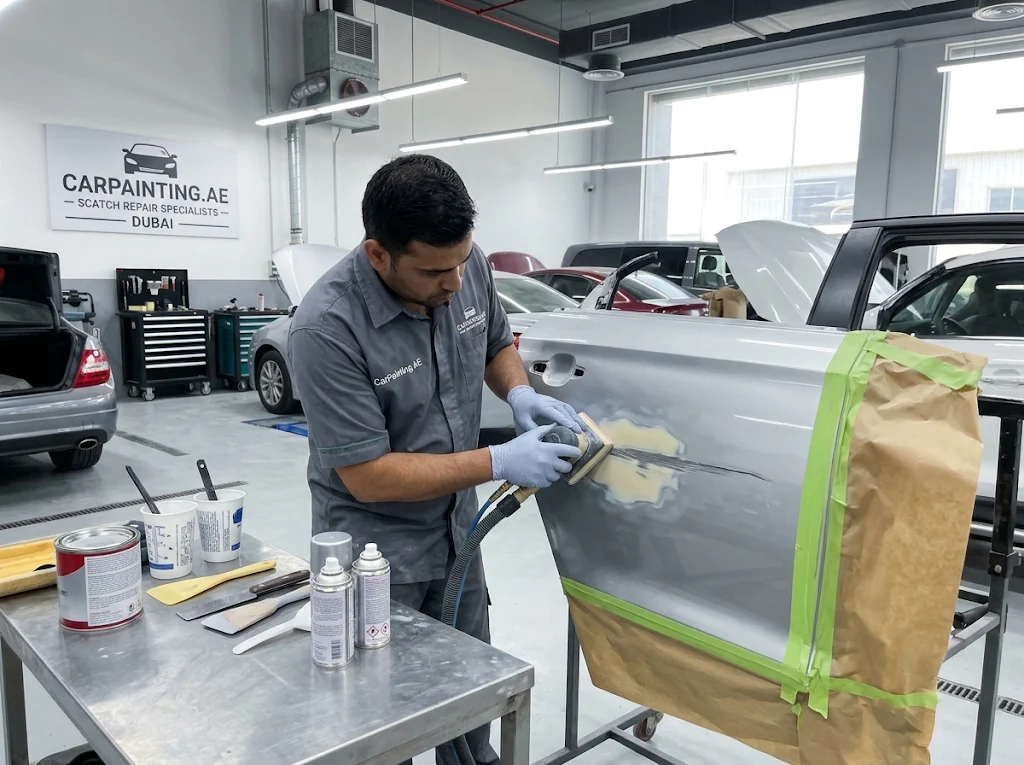
Not all scratches are equal: the four paint layers
A factory paint finish is not a single coat. It is a stack of thin layers, each with its own job, and together they are roughly as thick as a sheet of paper. Which layer a scratch reaches decides everything that follows: the method, the time and whether the repair can stay small.
- Clear coat. The transparent top layer that gives the gloss and shields the colour from UV. Most light marks from washing, sand and brushes stop here.
- Base coat. The colour itself, including any metallic flake or pearl. A scratch showing a pale or dull line of colour has broken through the clear coat into this layer.
- Primer. The bonding layer under the colour, usually grey, white or black. If you can see it, the paint above has been cut through.
- Bare metal. Steel shows as bright silver, aluminium as a duller grey. At this depth, nothing stands between the panel and Dubai's humidity.
This is why two scratches of the same length can need completely different work. A long clear coat mark across a door may polish out in a single visit, while a short gouge to metal needs filling, priming and painting.
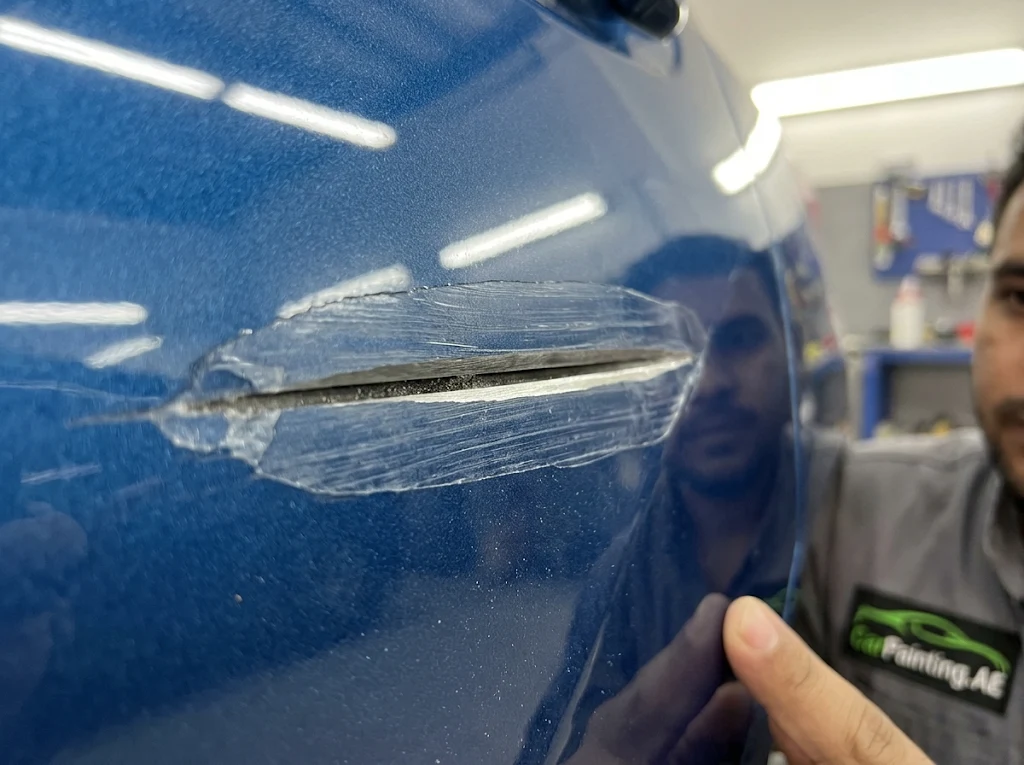
How deep is my scratch? The fingernail test and other checks
You can get a good first read on a scratch in under a minute, with no tools. Clean the area gently first, because dust can make a light mark look deeper than it is.
- The fingernail test. Draw a fingernail gently across the scratch, not along it. If the nail glides over, the mark is probably in the clear coat. If it catches, the scratch has likely reached the base coat or deeper.
- The water test. Wet the scratch. If it almost disappears while wet and returns as it dries, it is usually shallow enough for machine polishing.
- The colour test. Look straight into the scratch in good light. A white or hazy line on a dark car often sits in the clear coat. Grey primer or silver metal inside the line means the paint is cut through.
- The light test. Shine a phone torch at a low angle. Fine swirls scatter the light, while a single sharp line that stays visible from every angle is deeper.
- The edge test. Look for paint lifting or flaking along the sides of the scratch. Lifting paint means the bond is failing and the damage will grow.
These checks are a guide, not a diagnosis. Metallic and pearl colours hide depth well, and a scratch can be shallow for most of its length but deep at one point. Daylight photos from straight on and at an angle let us confirm the depth.
Not sure how deep it goes?
Send two or three daylight photos on WhatsApp and we will tell you which layer the scratch has reached.
Scratch types we repair
Most scratches in Dubai come from a handful of sources: car parks, car washes, wind-blown sand and the occasional vandal with a key. Each leaves a recognisable pattern, and each pattern points to a different repair.
Clear coat marks
Fine scratches, wash marks and light scuffs that sit in the top layer, where a fingernail glides straight over them. Machine polishing levels the clear coat around each mark so light reflects evenly again.
Base coat scratches
The scratch has cut through the gloss into the colour, so it shows as a pale or mismatched line. Polishing can soften it, but the colour has to be rebuilt to remove it completely.
Deep scratches to primer or metal
A line of grey primer or bright metal means every protective layer has been breached. These scratches need filling, priming and refinishing before moisture reaches the steel and corrosion starts beneath the paint.
Key scratch repair
Key damage often runs across two, three or more panels, and its depth changes along the way. We assess every panel on its own, then refinish and blend them as one so the colour reads consistently down the whole side.
Door-edge chips
Door edges take knocks from walls, pillars and neighbouring doors. The chips are small, but they sit on a sharp edge where paint is thinnest, so they expose metal quickly and need careful edge refinishing.
Mall-trolley marks
Trolleys leave low, horizontal scratches on doors, wings and bumpers, sometimes with a shallow dent. We check for both, because a scratch over a dent needs the panel reshaped before any paint goes on.
Polish, smart repair or panel refinish: which does my scratch need?
There are three honest answers to a scratch, and the right one is set by depth, length and position on the panel, not by whichever sounds quickest.
Machine polishing
For marks that stay within the clear coat. We measure paint depth first, then level a microscopic amount of clear coat around the scratch so enough remains to protect the colour. No paint is added.
Smart repair
For small, contained damage into the base coat or primer, such as a short scratch or a chip on a flat area. The damage is filled, primed and refinished locally, and the new colour is faded into the paint around it.
Panel refinish
For long scratches, scratches to metal over a wide area, and damage on a body line or edge, where a local repair would leave a visible boundary. The whole panel is painted and blended into its neighbours.
| Scratch depth | Fingernail test | Right repair | Typical time |
|---|---|---|---|
| Clear coat only | Nail glides over | Machine polishing | Same day, often a few hours |
| Into base coat | Nail catches lightly | Smart repair, or panel refinish if the scratch is long | 1–2 days |
| To primer | Nail catches clearly | Smart repair or panel refinish | 2–3 days |
| To bare metal | Nail drops into a groove | Treat, fill, prime and refinish the panel | 2–4 days |
| Key scratch across panels | Varies along its length | Panel refinish on each affected panel, blended together | 3–5 days |
Honest advice: Touch-up pens and off-the-shelf scratch compounds rarely fix a scratch that catches your nail. Pens leave a raised blob of colour, and aggressive compounds thin the clear coat around the mark, which makes a proper repair harder later. If it has reached the colour, leave it clean for the workshop.
Our six-step scratch repair process
Every scratch repair follows the same sequence, whether it is a chip on a door edge or a key mark along the whole car. What changes is how far each step goes.
Inspect and measure
We clean the panel, inspect the scratch under strong light and measure paint depth across the area. This confirms which layer the damage reaches and shows whether earlier refinishing sits underneath, which changes how the repair is planned.
Match the factory colour
We read the factory paint code from the car, mix to it and spray test cards, then compare them against the panel in daylight. Shades vary within the same code, so the test card, not the label, makes the final call.
Prepare and mask
The scratch is cleaned back to sound paint and any lifting edges are removed. Exposed metal is treated and primed. Neighbouring panels, trim, glass and parking sensors are masked so nothing outside the repair area is touched.
Fill and level
Deep scratches are filled in thin layers and sanded flat, so the repaired surface sits exactly level with the paint around it. Skipping or rushing this stage is what leaves a visible groove under fresh colour.
Paint, blend and cure
Base coat and clear coat are applied in a controlled booth, with the colour blended into adjacent areas so there is no hard edge. The panel is then cured under controlled heat so the new finish hardens fully.
Finish and inspect
Once cured, the repair is machine finished to match the surrounding gloss and texture. We check it in daylight and under inspection lamps, from several angles, before the car goes back to you.
Know the depth, know the plan
WhatsApp a photo of the scratch in daylight and the workshop will reply with the right repair and a realistic timeline.
Why shouldn't deep scratches wait in Dubai?
A scratch that stops in the clear coat is cosmetic. A scratch that reaches primer or metal is an opening in the panel's protection, and Dubai's climate works on it every day.
Moisture. Humidity runs high for much of the year, and cars parked outside often carry condensation by morning. That moisture collects in the groove of a deep scratch and sits on bare steel, where surface rust can appear surprisingly quickly.
Heat. Panel temperatures climb well above 45°C in summer, so the paint expands and contracts every day. That movement pushes at the weakened edges of a scratch, and paint that was sound beside it starts to lift and flake.
Spreading. Once corrosion starts, it creeps sideways under the paint. The visible line stays the same while the damage beneath it grows, so a scratch that needed a local repair can end up needing a panel refinish and metal treatment.
Sun and sand. With the clear coat broken, UV reaches the colour directly and fades it around the scratch, making the colour match harder over time. Wind-blown sand packs into open scratches and holds moisture against the metal.
If a scratch shows metal and you cannot book straight away, keep it clean and dry, park in shade where you can, and send us photos so we can tell you how urgent it is.
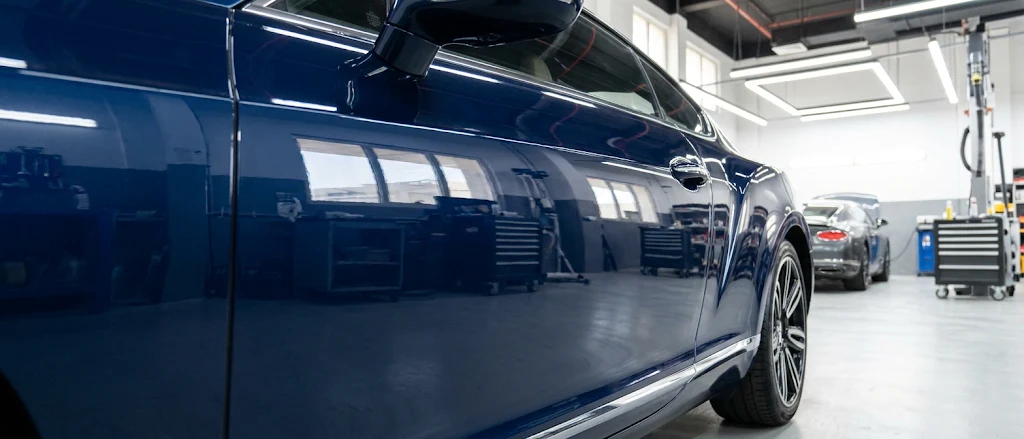
How do you choose a scratch repair shop? A checklist
Whether you come to us or go elsewhere, the best car body scratch repair shop in Dubai for your car is one that can answer these points clearly before any work starts.
- They judge depth before they promise. You should hear which layer the scratch reaches and why that decides the repair.
- They tell you when polishing is enough. A workshop that recommends a polish when a polish will do is matching the work to the damage.
- They match to the paint code and prove it. Ask whether they spray test cards and compare them on the car in daylight.
- They blend rather than patch. New colour should fade into the surrounding paint, so no line appears as the light moves across the panel.
- They give a realistic timeline. Filling and curing take time. A deep scratch promised back within the hour has probably skipped a step.
- They specialise. We focus on paint and bodywork only, which means colour matching and finish quality are what we do every day.
How to avoid car scratches in Dubai
Most scratches we see could have been avoided with a few habits, and they matter more here because of the dust and sand on every car.
Wash with care. Fine scratches in Dubai come from washing more often than from accidents. Dust and sand act like sandpaper under a cloth or brush, so rinse thoroughly first, use a clean wash mitt, and never dry-wipe dust off the bonnet with a cloth or tissue.
Park with space. In busy mall car parks, choose an end bay or a quieter level, and stay clear of trolley bays, where most low door scratches happen.
Rinse after sand. After a sandstorm or a desert drive, rinse the car before touching the paint. Sand gathers behind door handles, around mirrors and under the fuel flap, where hands and cloths drag it across the surface.
Check edges early. Look over the door edges and the front of the bonnet every few weeks. A chip caught while it is small keeps the repair small.
People often ask about protective films and coatings. We focus on paint and bodywork only, so our advice is about habits and proper repair.
Frequently Asked Questions About Car Scratch Repair
How do I know if a scratch can be polished out?
Run a fingernail across the scratch. If it glides over without catching, and the mark nearly disappears when wet, it is usually in the clear coat and can be machine polished. If your nail catches or you can see a different colour inside the scratch, it has gone deeper and needs paint. A daylight photo lets us confirm which.
Can a deep scratch to bare metal be repaired invisibly?
Yes, when it is done properly. The exposed metal is treated and primed, the groove is filled and sanded perfectly level, and the colour is mixed to your factory paint code, checked on test cards and blended into the surrounding paint. Once cured and machine finished, the repaired area should not be visible in normal light.
Do you repair key scratches along several panels?
Yes. Key scratches often cross a front wing, both doors and a rear quarter panel, and the depth usually changes along the way. We assess each panel individually, repair the deeper sections first, then refinish and blend the panels together so the colour stays consistent down the whole side of the car.
How long does scratch repair take?
It depends on depth. Clear coat scratches that only need machine polishing are usually done the same day. Scratches into the base coat or primer typically take one to three days. Deep scratches to bare metal take two to four days, and key scratches across several panels three to five, including filling, painting and proper curing.
Will the repaired area match the rest of the car?
Yes, that is the aim of every repair. We read the factory paint code, then spray test cards and compare them to your car in daylight, because the same code can vary slightly between cars and fades differently with sun exposure. The new colour is blended into the surrounding paint so there is no hard edge for the eye to find.
Do you need to repaint the whole door for one scratch?
Not always. A short scratch on a flat area of the door can often be repaired locally with smart repair. A long scratch, one that crosses a body line, or one near the door edge usually needs the panel refinished, because a local repair would leave a visible boundary. We will tell you which applies once we see photos.
Can scratches lead to rust in Dubai?
Yes, once a scratch reaches bare metal. Dubai's humidity and overnight condensation put moisture straight onto exposed steel, and rust can start quickly. It then spreads sideways under the surrounding paint, lifting it from beneath. Scratches that stay in the clear coat or base coat will not rust, but anything showing primer or metal should be repaired promptly.
Do you fix door-edge chips?
Yes. Door-edge chips are common in tight Dubai car parks and are easy to ignore, but they sit on a sharp edge where paint is thinnest and metal is exposed quickly. We clean back the chip, treat and prime any bare metal, then refinish the edge and blend it into the surrounding paint.
Is smart repair as good as a full panel repaint?
For the right damage, yes. Smart repair uses the same refinishing steps as a panel repaint, applied to a smaller area, and suits small, contained scratches on flat areas. It is not the right choice for long scratches, damage on edges or body lines, or several scratches on one panel, where a full refinish gives a cleaner, more durable result. We recommend whichever the damage actually needs.
How do I send photos of my scratches?
Tap the WhatsApp button on this page and send two or three photos taken in daylight: one straight on, one at an angle so the light shows the scratch, and one close-up with a fingertip beside it for scale. Add your car's make, model and colour, and we will reply with the right repair.
Book the best car body scratch repair shop in Dubai
From a single wash mark to a key scratch along the whole car, the first step is the same: a few clear photos. Send them on WhatsApp or call the workshop, and we will tell you which repair the scratch needs and how long your car will be with us.