
Best Full Sedan Car Painting Shop in Dubai
Choosing the best full sedan car painting shop in Dubai starts with knowing what a proper respray involves. This page is for saloon owners whose paint has faded, peeled or simply no longer suits them. It covers same-colour restoration, colour change, what 'full' should include and how long the car stays with us.
When does a sedan need a full respray instead of panel repairs?
Most paint problems on a saloon are local: a scraped bumper, a keyed door, a stone-chipped bonnet. Those are panel jobs, and repainting the whole car to fix them adds time without adding value.
A full respray makes sense when the problem is spread across the car. On a sedan, the long horizontal surfaces fail first: the roof, bonnet and boot lid face the sun all day, their surface temperature climbs well past 45°C in summer, and the clear coat there often gives up years before the doors do.
Signs that point to a full respray:
- Clear coat peeling on several panels. Once lacquer lifts on the roof, bonnet and boot together, patching one panel only makes its neighbours look worse.
- Fading or chalking across the car. If machine polishing no longer brings the gloss back, the top layer has worn too thin to save.
- Patchwork from past repairs. Several earlier panel jobs, each a slightly different shade or texture, can make a car look pieced together.
- Widespread sand and stone damage. A chipped bonnet, bumpers and sills, combined with a tired roof, add up to a whole-car problem.
- A colour you want to change. If the paint is sound but you want a new colour, a full respray is the way to do it properly.
Honest advice: If only two or three panels are affected and the rest of the paint is healthy, a full respray is usually the wrong fix. Panel repair with careful blending keeps more factory paint and gets you back on the road sooner, and we will tell you so.
Same-colour restoration or colour change: which is right for your sedan?
Every full respray starts with one decision: keep the factory colour or change it. The two jobs look alike from the kerb but are very different inside the workshop.
Same-colour restoration
We read the paint code from the car's identification plate, mix to it, then spray test cards and compare them in daylight with the door shuts, which have been shielded from the sun. On an exterior-only respray those shuts stay original, so the new paint has to sit beside them without a visible step.
Full colour change
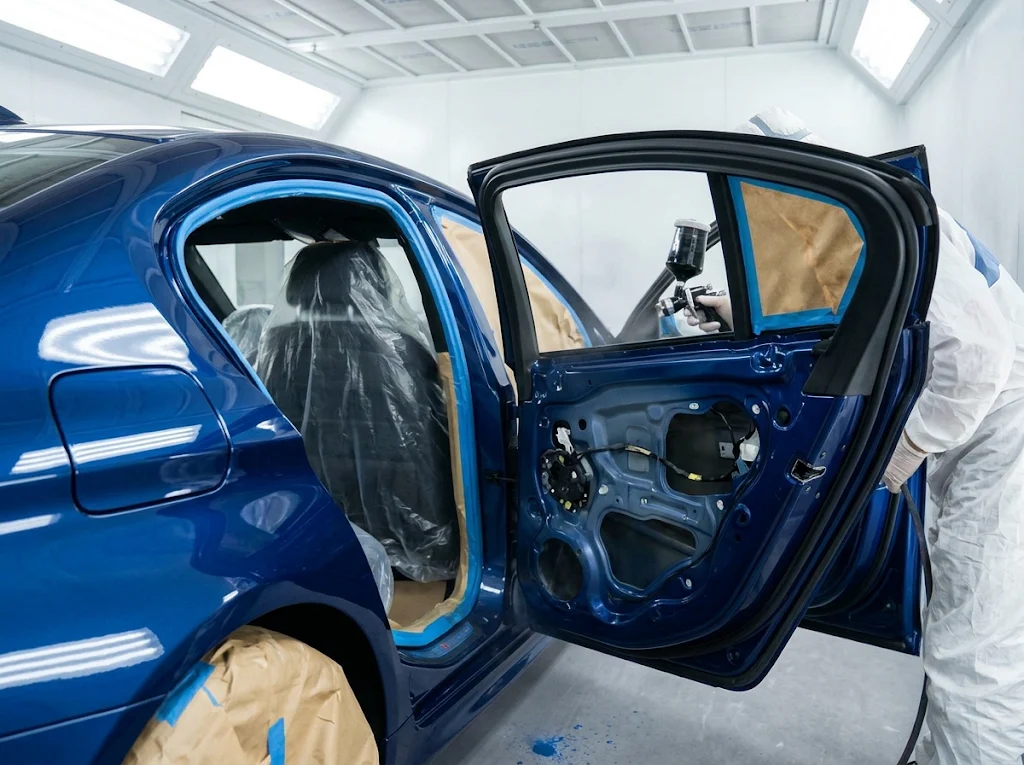
A colour change is a bigger project. Every surface that shows the old colour when a door, bonnet or boot is opened must be painted too, or the car gives itself away the moment anyone looks inside. That means more dismantling, more masking and more days in the workshop.
A car colour change in Dubai also means updating your registration, covered below. If you are torn between shades, we can spray sample cards for you to judge in real sunlight.
Not sure it needs a full respray?
WhatsApp a few daylight photos and we will tell you which scope fits your sedan.
What a full sedan respray should include
Ask three workshops what a full body paint sedan job includes and you may hear three different answers. Some mean the outer skin only; others include shuts, edges and everything behind trims. You should know exactly which surfaces will be painted before work starts.
- Exterior panels. Roof, bonnet, boot lid, wings, doors, bumpers, sills and pillars, each prepared on its own rather than sanded in one quick pass.
- Door shuts and jambs. The faces you see when a door is open, including hinge areas. Essential on a colour change, and worth adding to a same-colour job when the shuts are chipped or worn.
- Bonnet and boot edges. The underside lips and the channels around the boot opening. Rushed resprays give themselves away here, with hard masking lines visible every time you open the boot.
- Behind trims and seals. Paint should run under badges, mouldings, handles and window rubbers, not stop at their edges. That only happens when those parts come off.
- Optional deeper areas. On a colour change, the visible engine bay edges and the boot interior can be painted as well. They add the most time, so we agree them at the start.
The table below shows how those choices translate into scope and time. Days are working days and assume sound bodywork; dents, rust or old filler add time, and we flag them once we have inspected the car.
| Scope level | What's painted | Best for | Typical time in workshop |
|---|---|---|---|
| Exterior only, same colour | All outer panels; shuts left original | Faded or peeling paint, healthy shuts | 6–9 working days |
| Exterior + shuts, same colour | Outer panels, door shuts, bonnet and boot edges | Older paint with worn or chipped shuts | 8–11 working days |
| Full colour change | Outer panels, shuts, edges and areas behind trims | A new colour with no trace of the old one | 12–16 working days |
| Colour change incl. engine bay edge and boot interior | Everything above plus engine bay edges and boot interior | Cars kept long term, most complete result | 15–20 working days |
Our full sedan painting process in six steps
A full respray is mostly preparation. Spraying colour takes a fraction of the time; the days go into stripping, repairing and levelling the body.
Inspection and scope
We check the car in daylight, measure paint depth on each panel to find old repairs and thin spots, and agree the scope with you before anything is removed: which surfaces are painted, what comes off and the working days to expect.
Dismantling and protection
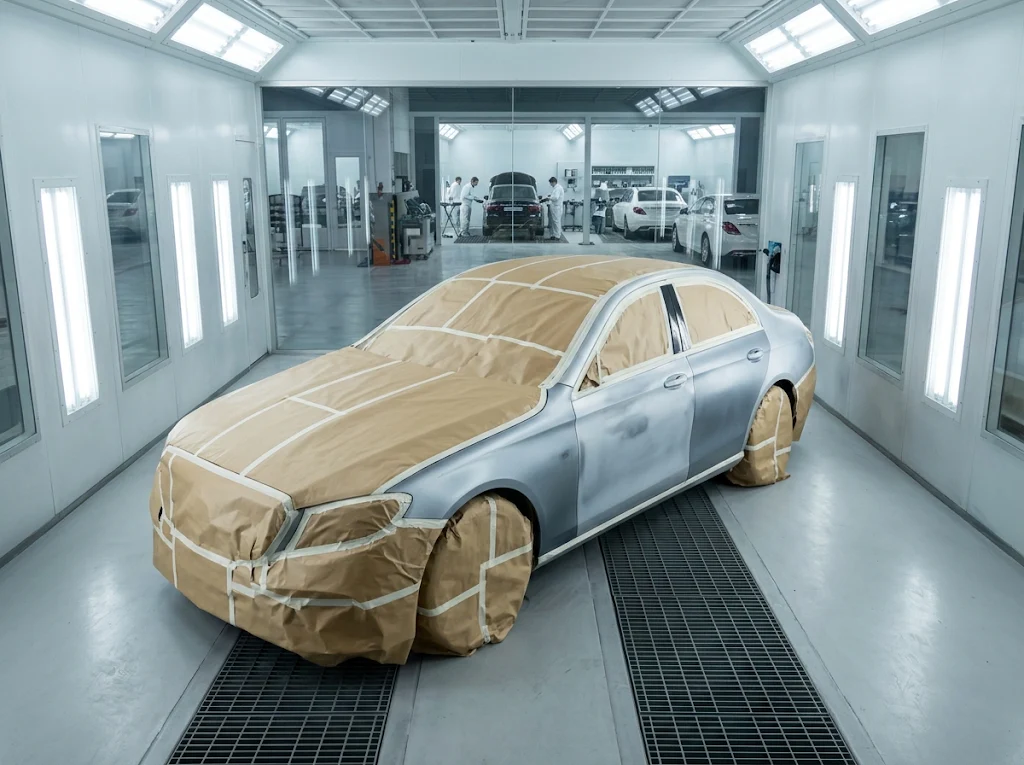
Bumpers, lights, handles, badges, mouldings and seals are removed and labelled. Sensors that stay in place, cameras and anything that cannot come off safely are masked, and the interior, glass and wheels are sealed off from dust and overspray.
Panel-by-panel preparation
Each panel is sanded, small dents are corrected and failed lacquer is taken back to a stable layer. Where paint is cracked or lifting, we strip to primer or bare metal rather than painting over a weak base.
Primer and guide coat
Bare areas are primed, then a guide coat, a light dusting of contrasting colour, is sanded off to reveal low spots and scratches. It is what makes long panels such as the roof and bonnet look truly flat.
Colour, clear coat and curing
Colour is checked on spray-out cards before it touches the car. Shuts and edges are painted first, then the exterior in base coat and clear coat, and the paint is cured in the booth with controlled heat.
Reassembly and finishing
Trims and parts go back on, with new clips where the old ones are brittle. Dust nibs are removed with fine sanding and machine polishing, and we inspect the car in daylight and under booth lights before handover.
Dismantling or masking: which gives the better finish?
Masking means covering a part with tape and paper and painting around it. Dismantling means removing the part, painting the panel beneath it completely and refitting it afterwards. On a full respray, that choice decides how the car looks up close for years.
A masked edge leaves a hard paint line against the trim. In Dubai's heat, as the panel expands and contracts beside rubber and plastic every day, that line is often where new paint starts to lift.
That does not mean everything comes off. Bonded glass stays in place, and parts held by fragile one-use clips are sometimes better masked than disturbed.
What usually comes off
Front and rear bumpers, headlights and tail lights, door handles, mirror covers, badges, side mouldings, boot lid trim and outer window rubbers wherever they can be removed cleanly.
What is usually masked
Bonded windscreens and rear glass, sensors and cameras that stay in their mounts, roof aerials on some models and any part whose clips are likely to break. Each is masked tightly and its edge checked by hand.
Planning a full respray? Start with photos
Send four corner shots and close-ups of the worst areas, and we will reply with a clear scope and timeline.
Changing colour in Dubai: RTA registration basics
Your registration card records your car's colour, so a full colour change has to be reflected there. A same-colour respray generally needs no update, because the record still matches the car.
In general, owners apply to RTA for the change, have the work done, then present the car for inspection so the new colour is recorded. Documents, steps and timing are set by RTA and can change, so confirm the current process with RTA before the car comes in.
- Plan the paperwork early. If RTA asks for anything from the workshop, tell us before the car arrives and we will provide what we can.
- Settle the shade first. The new colour usually has to be stated when you apply, so choose it from sample cards beforehand.
- Steer clear of official look-alikes. Schemes that resemble taxis, police or other official vehicles are not permitted on private cars.
This is general guidance from a paint workshop, not official advice; the owner is responsible for the registration, and RTA has the final word.
Choosing a full sedan paint shop in Dubai: questions to ask
If you are trying to find the best full sedan car painting shop in Dubai, a few direct questions will tell you more than any photo gallery. Here is what to ask, and what a good answer sounds like.
Which surfaces are included?
A clear answer names them: outer panels, door shuts, bonnet and boot edges, areas behind trims. If the reply is simply 'the whole car', ask exactly where the paint stops.
What comes off, and what is masked?
You want to hear that bumpers, lights, handles and mouldings come off. A workshop that plans to mask everything may finish sooner, but the edges will show it.
How is the colour matched?
Look for the paint code, spray-out test cards and a daylight check against the shuts. Mixing by eye or from a generic chart is how a 'same colour' respray ends up a shade off.
How is the paint cured?
Controlled booth curing gives the clear coat a hard, even finish. Paint left to air-dry in dusty, humid conditions picks up contamination and can stay soft for longer than it should.
How many working days?
Expect an answer in working days that changes with scope. A promise of two or three days for a full colour change usually means preparation or curing is being cut short.
Will you tell me if I don't need it?
The right workshop will sometimes talk you out of a full respray. If three panels are the problem, repairing those three panels is the honest answer.
Caring for a fresh full respray in Dubai's climate
New paint is dry when you collect the car, but it keeps hardening for weeks. How you treat it in that time, especially in summer, decides how long the gloss lasts.
- Hand wash only at first. Skip brush car washes and keep pressure washers away from panel edges for the first month, and always rinse sand off before touching the paint.
- Park with the roof in mind. Shaded or covered parking protects the surfaces that take the most sun, and in tight mall car parks an end bay helps avoid door knocks on fresh panels.
- Remove droppings and sap quickly. In the heat, bird droppings and tree sap can mark curing paint within hours; soften them with water and lift them off gently.
- Hold off on polishing. Give the paint time to cure before any machine polishing or waxing, and send us a photo if anything looks wrong.
Frequently Asked Questions About Full Sedan Painting
How long does a full sedan respray take?
Most full sedan resprays take between six and twenty working days, depending on scope. An exterior-only, same-colour job sits at the shorter end, while a full colour change that includes door shuts, engine bay edges and the boot interior takes longest. Rust, dents or old filler add time, and we confirm the expected number of days after inspecting the car.
Is a full respray better than repainting individual panels?
Not always. If damage or fading is limited to two or three panels and the rest of the paint is healthy, panel repair with careful blending is usually the better choice: it is quicker and keeps more factory paint. A full respray is the right answer when clear coat failure, fading or old repairs are spread across most of the car.
Do you paint the door shuts and inside the boot?
Yes, when the scope calls for it. Door shuts, bonnet and boot edges are always painted on a colour change, so the old colour does not show when a door is opened. On a same-colour respray we include them if they are worn or chipped. The boot interior is an optional addition on colour changes, agreed before work starts.
Do I need RTA approval to change my car's colour?
Generally, yes. Your registration records the car's colour, so a colour change needs to be applied for, and the car inspected afterwards so the record can be updated. Requirements and steps are set by RTA and can change, so please confirm the current process with RTA before booking. A same-colour respray normally needs no change to the registration.
Will a full respray affect resale value?
It can, in either direction. A well-prepared respray in the original colour, with shuts and edges done properly, usually helps a faded car present better. A poor respray with overspray, masking lines or a mismatched shade can put buyers off. A colour change comes down to taste, and some buyers will prefer the factory colour.
Can you respray a sedan in its original factory colour?
Yes. We read the paint code from the car's identification plate, mix to that code and spray test cards to check the shade in daylight before painting. Factory colours can vary slightly between production batches, so we compare the cards with the door shuts, which are usually the best-preserved original paint on the car.
Do you remove trims, handles and lights before painting?
Yes, wherever they can come off cleanly. Bumpers, lights, handles, badges, mouldings and removable seals are taken off so paint covers the panel fully rather than stopping at a tape line. Bonded glass, some sensors and parts with fragile one-use clips are masked instead. Everything removed is labelled and refitted, with new clips where the originals are brittle.
How long should I wait before washing a freshly painted car?
Gentle hand washing with water and a mild car shampoo is usually fine after the first week. Avoid automatic brush washes, strong chemicals and pressure washers near panel edges for at least the first month while the paint finishes hardening. In the meantime, rinse off sand and bird droppings promptly rather than wiping them dry.
Which sedans do you respray most often?
We regularly respray everyday saloons such as the Toyota Camry, Honda Accord and Nissan Altima, alongside executive models including the Mercedes-Benz E-Class, BMW 5 Series, Audi A6 and Lexus ES. The process is the same for each, but trim removal, sensor layout and paint codes differ by model, so we plan dismantling around the specific car.
How do I start a full respray enquiry?
WhatsApp a set of photos using the button on this page: all four corners of the car in daylight, close-ups of the worst areas and the door shuts if you are considering a colour change. Tell us whether you want the same colour or a new one, and we will reply with the scope we suggest and the working days to expect. You can also call the workshop.
Looking for the best full sedan car painting shop in Dubai?
We have been painting cars in Dubai since 2015, and every full respray starts with clear photos and an honest conversation about scope. Send yours on WhatsApp or call the workshop, and we will tell you what your sedan needs.