Which cleaner to use, in what order, and the household products that cause fish-eyes in fresh paint.
Quick answer
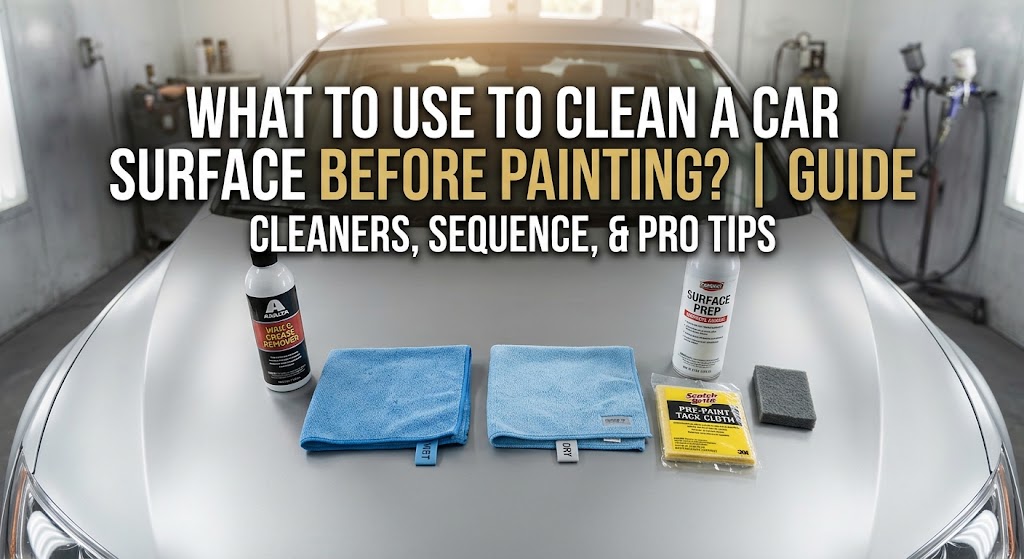
What to use to clean a car surface before painting: wash with a wax-free shampoo, then wipe every panel with a solvent-based wax and grease remover using two cloths, one to wet and one to dry. Tack-cloth the panel just before spraying. Diluted isopropyl alcohol is an optional final wipe, not a substitute.
Why Cleaning Matters: The Contaminants That Ruin Paint
Paint only bonds as well as the surface underneath it. Any film left on the panel, even an invisible one, weakens adhesion and can cause peeling, blistering or craters seconds after the gun passes.
- Silicone: the worst offender, causing fish-eyes: round craters where wet paint pulls away. Tyre shine, dashboard sprays and some polishes are common sources.
- Wax and polish: designed to repel liquids, which is exactly what you do not want under fresh paint.
- Fingerprints: skin oil and sweat leave a film that can show through as blotches.
- Sanding dust: trapped particles feel like grit and spoil the gloss.
- Tar and sap: sticky deposits a normal wash rarely shifts.
Sanding, masking and priming are separate stages of preparation; this guide covers only the cleaners.
What to Use to Clean a Car Surface Before Painting: Step by Step
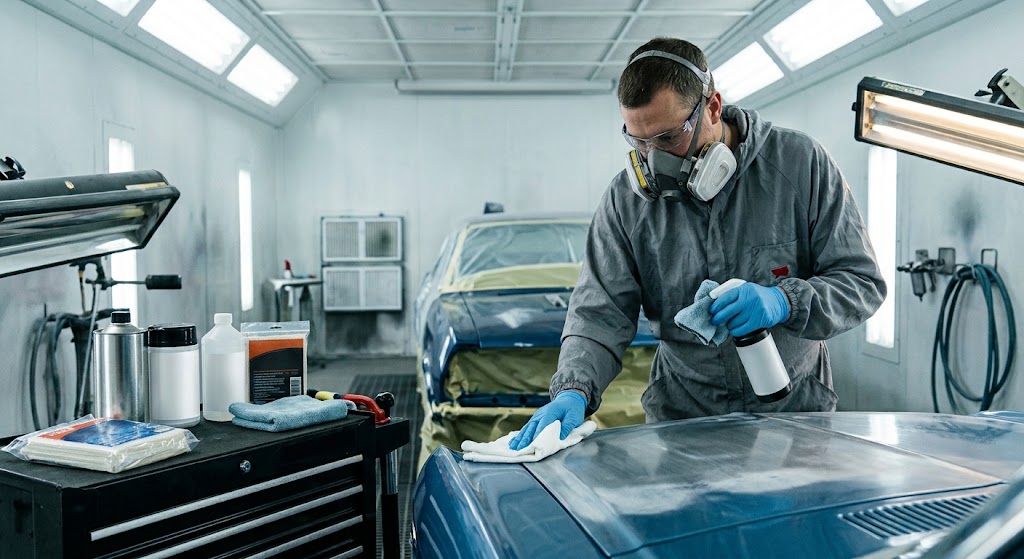
Solvent cleaners are flammable: ventilate the space, keep away from sparks and wear nitrile gloves and eye protection from the first solvent step.
- Wash with wax-free shampoo. Dry with clean microfibre and avoid “wash and wax” products.
- Remove tar and sap with a solvent cleaner on a clean cloth.
- First wax and grease remover wipe, before any sanding, so you do not grind contamination into the surface.
- Sand, then blow off with oil-free compressed air to clear dust from edges and gaps.
- Second wax and grease remover wipe to lift sanding residue and fingerprints.
- Optional IPA wipe with diluted isopropyl alcohol, where the paint system allows it.
- Tack cloth, glided lightly over the panel just before spraying.
The two-cloth method
Dampen one cloth with cleaner and wet a section about half a metre square, then immediately wipe it dry with a second clean cloth. If the solvent flashes off on its own, dissolved grease and silicone settle straight back onto the panel.
Wipe in one direction, turn the dry cloth often and replace both cloths once dirty. If fish-eyes still appear, the panel or workshop air is contaminated and the fix usually means sanding back and starting again; that is when professional help is worth it.
Want a contamination-free finish without the risk?
CarPainting.ae prepares and paints in a controlled environment. Send photos on WhatsApp for a quote.
WhatsApp CarPainting.ae+971 52 791 4606
Wax and Grease Remover vs Panel Wipe vs Isopropyl Alcohol
Labels vary between paint systems, so check the paint maker’s data sheet for the cleaner it specifies.
Wax and grease remover
A solvent-based cleaner that dissolves wax, silicone, oil and grease. It is the first and main cleaner for old paint, bare metal and sanded surfaces.
Panel wipe
Usually a milder, faster-evaporating final cleaner used just before primer or base coat; many are water-based.
Isopropyl alcohol
Isopropyl alcohol before painting lifts fingerprints and light oils but is weak on wax and silicone, so it is an optional final wipe only.
| Cleaner | Removes | When to use | Watch out for |
|---|---|---|---|
| Wax-free car shampoo | Dirt, dust, road film | First step, before any solvent | “Wash and wax” shampoos leave wax behind |
| Solvent-based wax and grease remover | Wax, silicone, oil, grease, tar | Before and after sanding | Flammable; can attack some plastics and fresh primer |
| Water-based pre-paint cleaner | Salts, sweat, sanding residue | Final clean and plastics | Slower to evaporate; wipe fully dry |
| Isopropyl alcohol (diluted) | Fingerprints, light oils | Optional final wipe | Weak on silicone; dilute with distilled water |
| Tack cloth | Fine dust and lint | Immediately before spraying | Pressing hard can leave sticky residue |
| Oil-free compressed air | Dust in gaps, edges and seams | After sanding, before tacking | Unfiltered lines spray oil onto the panel |
Cleaning Plastic Parts: Bumpers and Mirrors
Plastic bumpers and mirror caps build up static when wiped, pulling dust back onto the surface, and new parts can carry release agents.
- Scuff with a fine pad and wax-free shampoo to remove release agents.
- Clean with an anti-static plastic cleaner, usually water-based, using the two-cloth method.
- On bare plastic, apply an adhesion promoter before primer and respect its flash time.
- Never use thinners or strong solvents, which can soften or swell the plastic.
What Not to Use Before Painting
- Household glass or kitchen cleaners: many leave surfactant or fragrance films, and a kitchen degreaser before painting car panels is a classic mistake.
- Dish soap: poorly rinsed residue interferes with adhesion.
- Thinners on plastics or fresh primer: they can soften plastic and wrinkle primer.
- Rags washed with fabric softener: softener leaves oily residue in the fibres. Use new lint-free cloths.
- Bare hands: one touch after cleaning leaves skin oil. Handle panels by the edges.
- Tyre shine and trim sprays nearby: keep silicone products out of the work area entirely.
Cleaning in Dubai Conditions
Fine dust settles on a clean panel within minutes, so tack and spray inside a clean booth, not an open garage.
- Heat: a sun-baked panel flashes solvent off before you can wipe it; keep the panel cool, work in shade and clean smaller sections.
- Sweat: salt and oil make it a contaminant; wear nitrile gloves and change them when damp.
- Humidity: a panel brought from air conditioning into humid coastal air can collect condensation; let it warm up and wipe it dry.
- Fumes: ventilate and wear a suitable respirator when spraying.
A small touch-up is realistic at home, but on a full panel of a luxury car one speck of dust or silicone shows in the gloss, which is why CarPainting.ae paints in a controlled environment.
Getting the Clean Right
Wash with wax-free shampoo, clean twice with wax and grease remover using two cloths, and tack the panel just before spraying. Skip household cleaners, keep silicone away and wear gloves throughout.
Frequently Asked Questions
Can I use isopropyl alcohol to clean a car before painting?
Yes, as a final wipe. Diluted with distilled water, isopropyl alcohol removes fingerprints and light oils and evaporates cleanly. It is too weak on wax and silicone to replace a dedicated wax and grease remover, so use it after that step, never instead of it.
What is the difference between wax and grease remover and panel wipe?
Wax and grease remover is normally the stronger, solvent-based product for the first clean, dissolving wax, silicone and oil. Panel wipe is usually a milder final cleaner used just before primer or base coat, often water-based. Names overlap between manufacturers, so read the label.
Is dish soap OK to clean a car before painting?
It is best avoided. Dish soap can leave residue if it is not rinsed perfectly, and it does nothing about silicone. Wash with a wax-free car shampoo, rinse with clean water and dry thoroughly, then follow up with wax and grease remover before primer or paint.
When should I use a tack cloth?
Use it last, immediately before you spray, once the solvent cleaner has fully evaporated. Glide it lightly across the panel to pick up dust and lint; pressing hard can leave sticky residue. In Dubai, tack inside the booth, because dust resettles within minutes.
What causes fish-eyes in car paint?
Fish-eyes are small round craters where wet paint pulls away from a contaminated spot, usually silicone. Common sources are tyre shine, dashboard sprays, some polishes and rags washed with fabric softener. Thorough cleaning prevents most cases; once they appear, the area normally needs sanding back and repainting.
Do plastic bumpers need a different cleaner before painting?
Yes. Plastics hold static and can carry release agents, so they need an anti-static plastic cleaner, usually water-based, applied with the two-cloth method. Bare plastic also needs an adhesion promoter before primer. Avoid thinners and harsh solvents, which can soften or swell the surface.
Get a flawless, contamination-free finish
Skip the fish-eye risk. CarPainting.ae prepares and paints in a controlled environment. Send photos on WhatsApp for a quote.
WhatsApp CarPainting.ae+971 52 791 4606